
To answer this question, we will discuss the prophet’s life and attempt to arrive at a fair conclusion by weighing the pros and cons of his general contribution to the Arabian Peninsula of his period and how this affects the generation of Muslims of the present age.
In Pre-Islamic Arabia, around the time of the prophet’s birth (570 CE), most of Arabia was polytheist. That is, they worshipped many deities. Arabs were living in the times of jahiliya (ignorance or foolishness). Different clans and tribes occupied Arabia, a divided society lacking peace and social justice. There was a preference for male offspring; therefore, the practice of female infanticide was common. As a result, women had neither personal worth nor rights (Omid, 2009). There was also an absence of scripture specifically revealed to the Arab people, nor did they have any prophets similar to those of Jews and Christians (Armstrong, 2001). The Arab culture needed a shift, which came with Muhammad’s calling to prophethood.
MUHAMMAD’S ACHIEVEMENTS
Qur’an
The profound importance of this achievement is that, politically speaking, with the Qur’an, Muhammad succeeded in uniting the various clans into one nation which worships one God (Cotterell, 2011). However, Muhammad was confused about his encounter with the supernatural being (supposedly Jibril, the angel Gabriel). He could not tell if he was going insane if it was a false prophecy or a true divine calling; he even thought he was demon-possessed. The critical point is that, from a Muslim point of view, the Qur’an does not teach any new law; it intends to restore the faith. However, there seems to be a contradiction regarding divine revelation in Islam because if ‘the Qur’an is just a repetition of all the religious teaching that can be found in the Torah (Tawrah), the Psalms (Zabur) and the Gospel (Injil)’ (Jomier, 1997), then this implies that the previous scriptures were all trustworthy enough to be copied. Therefore, it seems reasonable to argue that Muhammad did not achieve anything regarding divine revelation only by repeating material from the previous sacred scriptures since this suggests that there was no need for a new scripture or a new prophet in the first place. To support this idea, the doctrine of tawatur asserts that any text attested by various documents or transmitted through trustworthy people cannot be false or corrupted; therefore, it is reliable. Owing to this, it is likely that there was no need for another sacred scripture, such as the Qur’an, since Christians have manuscripts of the Old and New Testaments and have trustworthy transmitters (Cotterell, 2011). Furthermore, it had been stressed that Muhammad’s intention was not to abandon the ways of Judaism and Christianity, contradict their prophets, or start a new religion (Armstrong, 2001). Nevertheless, there is a considerable amount of theological differences between Muhammad’s teachings and Christianity, and to justify these deviations, he claimed that the Gospels’ message had been corrupted.
Historical facts indicate that the prophet of Islam contradicted previous prophets’ teachings. For instance, Muhammad seems to have strayed away from Jesus’ teachings by living a life full of violence, whilst Jesus taught to live a peaceful life. An illustration of this is in Matthew 26:52: “Put your sword in its place, for all who take the sword will perish by the sword.”
Furthermore, as Cotterell wrote (2011): “Jesus and Muhammad. Not to be compared with each other but rather to be contrasted with each other. Jesus, the man of peace, whose life ended on the cross. And Muhammad, the man of war, who lived a life that was often violent.“
Notably, although it is emphasised that he was just a prophet, it could be suggested that he carries the authority of the Qur’an since Muhammad had the power to approve or disapprove, which makes the infallibility of the Islamic scripture questionable. To support this viewpoint, Sura 59:7 says: ‘Whatever the Messenger gives you, take it; and whatever he forbids you, abstain from it.’
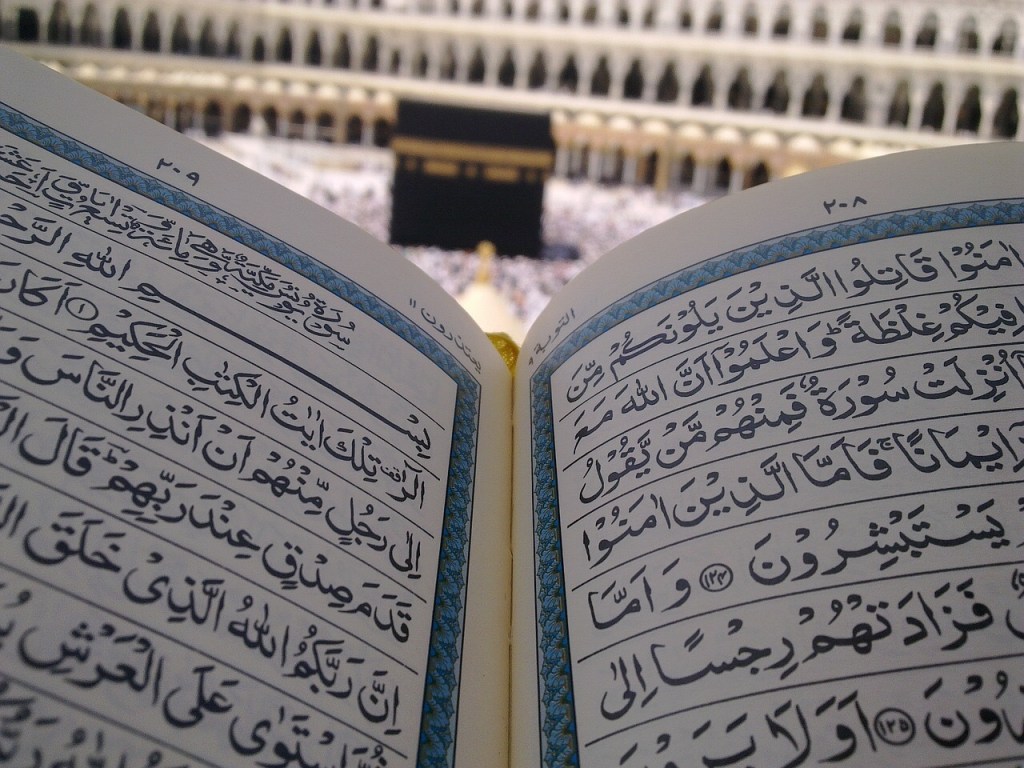
Additionally, it appears that Muhammad had been just imitating ideas from the previous scriptures, introducing new contradictory teachings into the Qur’an to suit his shortcomings (Cotterell, 2011), which strongly suggests that the Qur’an had been manipulated and that Muhammad is the one behind its revelation instead of God. Whether it was a true divine revelation is still debatable, as Muhammad accepted and rejected religious customs as he considered convenient. For instance, the Jewish Fast of Yom Kippur (The Day of Atonement) was embraced, hoping that the Jews would recognise Islam as a continuation of Judaism. Still, when the Jews rejected him as a prophet (‘for the Jewish people, the age of prophecy has ended’), he discontinued the practice and replaced it with the Fast of Ramadan. A similar thing occurred with the direction of prayer (qiblah), which changed from Jerusalem to Mecca. Muhammad initially led prayers facing towards Jerusalem, but apparently, Muhammad only followed the Jewish and Early Christian custom of praying towards Jerusalem to gain the sympathy of the Jewish people. This seems to suggest that Muhammad’s intention concerns politics rather than theology. Again, we see that he discontinued this practice when Jews were not willing to accept Islam because his message did not follow the Bible. Just after this event, a revelation from the Qur’an had come to justify the change in Sura 2:144-5 (Cotterell, 2011). This change of direction of prayer appealed to the Arabs, as not only they had a prophet and scripture, but now they also had their direction of prayer. This achievement is worth highlighting because it is a turning point from Jerusalem to Mecca, where the Ka’ba is. This signified a ‘declaration of independence from Judaism and Christianity’, setting themselves apart and breaking up with the previous religious customs of the period to establish Islam’s most holy place, towards which all Muslims should pray (Armstrong, 2001).
Significantly, Muhammad’s supposed mission was to call the Arabs to return to the religion of their father Abraham. Still, if it were a true revelation from the same God, and if Muhammad himself claimed that Islam was the continuation of Judaism, then it does not make any sense that he would turn away from the ways of the previous religions by creating Islam’s religious customs, such as the fast of Ramadan and praying towards the Ka’bah. If the Qur’an were the true Word of God, it is also inexplicable that Sura 33:37 would contradict the teachings in the Torah (precisely the instruction regarding sexual immorality in Leviticus 20:12, which has a penalty of death). Furthermore, the Gospel warns: “But even if we or an angel from heaven should preach to you a gospel contrary to the one we preached to you, let him be accursed. As we have said before, so now I say again, if anyone is preaching to you a gospel contrary to the one you received, let him be accursed.” (Gal 1:8-9).
Additionally, continuous well-timed and convenient revelations we will discuss later make room for suspicion. Examples of these are the one he received after the attack carried out by his spies against the caravan and the revelation in Sura 33:37 regarding the issue of marrying Zaynab, Zayd’s wife (his adopted son), which is an absolute contradiction to the Hebrew Bible in Leviticus 20:12:
“If a man lies with his daughter-in-law, both of them shall surely be put to death. They have committed perversion. Their blood shall be upon them.”
At first thought, Muhammad refused the offer Zayd to divorce Zaynab, but then the timely divine message was revealed to him. If this was not enough, an exclusive revelation that only applies to Muhammad came, and that was the revelation in Sura 33:50, in which the Qur’an “made it easier” for the prophet, giving him the special privilege to marrying as many wives as he wishes; whereas, the revelation for the rest in Sura 4:3 states that a Muslim man can marry only up to four wives (Cotterell, 2011).
Return to the Pure Faith?
From a Muslim point of view, Islam is not a new religion, but it is the default faith of any individual, that is, everyone is born a Muslim, someone whose faith has not been “corrupted” or one pure of faith (a hanif). Thus, the calling of Muhammad would signify “the return to the pristine purity” (Jomier, 1997). On the one hand, the tawhid (monotheism) was at the heart of Islamic theology. But on the other hand, the supreme focus of prayer was the Black Stone, which is in one corner of the Ka’ba. The Black Stone is a remnant of the pre-Islamic pagan worship and jahiliya (a time of ignorance) when the Arab peoples used to worship ‘strangely coloured, strangely shaped, huge, oddly isolated stones’. Thus, it is highly likely that Muhammad had to keep the Ka’ba and the Black Stone due to this pagan influence, and as many other times, received justification in Sura 2:125-7.
Establishment of the “Five Pillars” of Islam
1. Shahada (Declaration of faith)
As Ayoub (2004) writes, ‘it is meaningless unless it becomes a true expression of personal faith (iman) and righteous living (ihsan)’. However, as we will see later, it was meaningful enough if anyone wanted to live, as new converts to Islam had to recite this “creed” to preserve their lives. Thus, it seems that Muhammad did not care if people converted to Islam due to a genuine recognition of the faith and its prophet; instead, he appeared to be more concerned with taking on new territories and gaining new converts, most of the time by force and if not by actual power, people voluntarily surrendered to Islam because of fear.
2. Salat (Prayer)
Muhammad introduced the ritual prayer (Montgomery Watt, 1961), which constitutes the second pillar of Islam. He used to pray five times daily (at dawn –fajr, midday –zuhr, mid-afternoon –asr, sunset –maghrib and night –isha) (Guillaume, 2013), used by Muslims worldwide
3. Zakat (Obligatory alms)
Muslims must give 2.5% of their annual income. It is intended to purify themselves from greed and all kind of wealth covetousness. However, Muslims had an interesting strategy of redistributing wealth and increasing their income by practising razzia, which we will discuss afterwards.
4. Siyam (Fast of Ramadan)
The fast is not a mere ritual but an expression of concern for people in need. However, later we will see it is contradictory.
5. Hajj (Pilgrimage)
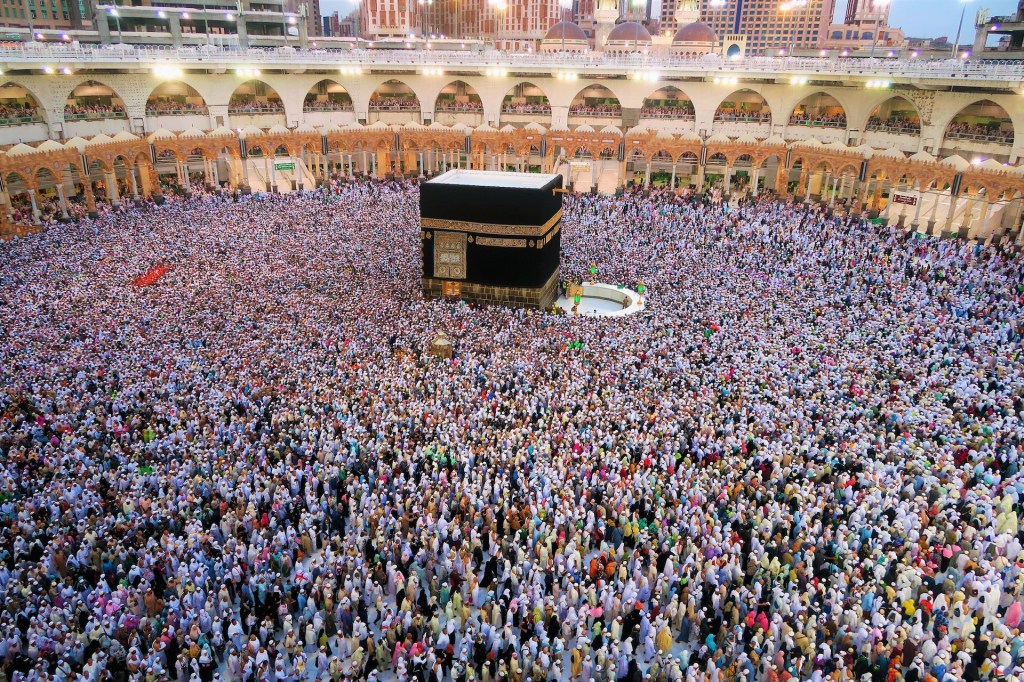
This was just an ancient ritual that was practised in pre-Islamic Arabia. So the only thing Muhammad did was refashion it and adjust it to the Islamic monotheistic faith (Ayoub, 2004).
Social Justice
It is believed that Muhammad brought social justice and cared for those in need and people experiencing poverty in his society. However, he also used to practice ‘ghazu, which means “raid”, and consists in attacking rich Meccan caravans to gain an income. Therefore, we can see that Muhammad tried to help redistribute the land’s resources (Armstrong, 2001) by doing evil to achieve something good.
This act of raiding caravans is also known as razzia. They could practise it, but with one condition: they agreed to abstain from practising it during the sacred months. There was an occasion when the pilgrimage was near, and Muhammad sent a small group of spies near Mecca, with the only command of finding out what Meccans were planning against him. Nevertheless, these spies violated the agreement regarding razzia, as they finally decided to attack the caravan they encountered on their way to Mecca. They killed a Qurayshi man, while two others ended up being their prisoners. Jews and even Muslims in Medina were indignant at the idea of this incident. At first, Muhammad was not happy about it, but a revelation solved the problem (Sura 2:216-217):
Fighting [in defence] is ordained for you, abhorrent as it may be to you. You may dislike something although it is good for you or like something. Still, it is bad for you: God knows, but you do not. They ask you about fighting in the sacred month. Say ‘To fight [in a sacred month] is a grave matter; but barring people from the path of God, to deny Him, and expelling people from the Sacred Mosque are far graver in His sight; and persecution is worse than killing.’ They will not stop fighting you until they make you renounce your faith if they can.
The above Qur’an verse teaches people that killing is preferable to persecution. This teaching is an absolute contradiction to the Biblical teaching in Matthew 5:44-45, which clearly states to pray for those who persecute you:
44“But I say to you, love your enemies, bless those who curse you, do good to those who hate you, and pray for those who spitefully use you and persecute you, 45 “that you may be sons of your Father in heaven;“
After all, it seems that praying five times a day was not sufficient to find time to pray for those who persecute them. After this revelation, Muhammad and his followers could allow themselves to be violent towards the Meccans, as these prevented them from the pilgrimage to the sacred Ka’ba. Violence is now seen as good and acceptable, resulting in more disturbances. This verse from the Qur’an is of great weight, as it marks the start of jihad (Cotterell, 2011).
Despite the claim of bringing social justice, the primaeval beginnings of the dhimmi doctrine had taken place at Khaybar. This doctrine would define the status of non-Muslims under future Muslim victories. Dhimmis were subject to Muhammad, and although they were free to practise their religion, they did not have civil rights (Cotterell, 2011).
Women, Children and Marriage
In pre-Islamic Arab society, there was a severe concern about honour and shame. Since women could easily be the reason for dishonour to the family, there was a tendency to bury their female infants alive. Consequently, women were considered worthless and a burden. However, female infanticide became strictly forbidden when the Qur’an came through Muhammad. Moreover, Islam supports the vindication of these women who were killed just for being females and what it represented to be one at that time (Ayoub, 2004). Additionally, women were given rights such as inheritance and divorce (Armstrong, 2001).
Having said that, it is likely true that women were still seen as objects as they had a price (the mahr) in marriage. Another issue was regarding child custody, which strongly indicates that women do not have the same rights as men since the child belongs to the father in Islam (Ayoub, 2004).
Despite the assertion that Muhammad was helping those in need and people experiencing poverty and was against slavery, historical facts seem to prove the opposite. An example is the Qurayzah massacre, in which ‘all Qurayzah men were murdered, and all their women and children were put into slavery’—moreover, Aisha, Muhammad’s favourite wife, witnessed a woman was also beheaded in this massacre (Cotterell, 2011).
Ummah
The establishment of the ummah (community of believers) seems to be the most significant achievement of Muhammad. He initiated this through The Constitution of Medina, in which ‘the status and duties of each group of people in Medina are detailed, and in which it is clarified that the Jews would receive help and protection and be considered equals. Consequently, Jewish people were expected to return the favour by siding with the Muslims in fights. When all parties agreed upon the Constitution of Medina, it meant the birth of the ummah, and its fundamental idea consisted in passing from loyalty to one’s clan to allegiance to the entire community (Cotterell, 2011).
The ummah had its positive advantages, such as unifying the Arab community; then again, it also had significant relational disadvantages, as the old clan loyalty and family bonds had been replaced by the bond which bound together all Muslims but excluded the rest, regardless of what the blood ties might be between the Muslim and the non-Muslim (Cotterell, 2011). In a few words, the ummah’s bond superseded any family bond during the war.
Peace and Unity
The victory of Muslims at the Battle of Badr was one of his remarkable achievements, as it confirmed Muhammad’s power and enriched his status. However, Muslims also died in the war, and some abandoned Islam, as they perceived it as dangerous, in which actual death was possible. Once again, another dubious revelation was given to the prophet. This revelation stated that ‘to die fighting for Islam meant instant entrance into Paradise’ (Cotterell, 2011). Again, this is a deviation from the previous teachings, as on several occasions in the Bible, it is said that to be saved all one need to do is to believe in Jesus, no fighting nor dying involved.
Muhammad only (note my italics) achieved peace after fighting so many battles. As such, this shows that the only way to have peace with Muslims is through joining them or being their allies. In other words, although in the end, Muhammad had brought peace to Arabia, however, it did not come without physical fights and the killing of innocent people, thus, defiling the very significance of the word “peace” in the first place. For instance, the incidents with the three Jewish tribes (Qaynuqah, Nadir and Qurayzah), especially the massacre of the Qurayzah tribe, in which, according to sources, Muhammad showed no mercy (Armstrong, 2001). This is something to ponder since how can someone like Muhammad, the ultimate prophet of the Most Merciful Allah, not demonstrate mercy?
Moreover, Muhammad had to wage war before he made peace, which suggests that the reasons behind this peace were mainly political and fear, not because Islam is a peaceful religion. To support this idea, Ayoub (2004) writes:
“Whenever an individual or a tribe accepted Islam, all hostilities ceased, and the enemy became brothers in faith.”
After many battles, Muhammad’s long-time adversary, Abu Sufyan, the Meccan leader, submitted to him and converted to Islam, which meant the conquest of Mecca. This occurred only because Abu Sufyan was threatened with being beheaded, and he had no choice but to accept Islam or lose his head (Guillaume, 2013). If peace were achieved in the north (Mecca), the south (the Bedouin) would still be appeased in the Battle of Hunayn. However, it was on a later occasion that the last idol, Al-Lat, would be destroyed, with the consequent submission of the south to Islam (Cotterell, 2011).
After this, it could be said that the task of creating the ummah was accomplished entirely, as now they were all Muslims. However, there was a downside: the razzia (raiding of caravans) had disappeared, as now they could not attack each other. Therefore, the Arabs planned on taking on the Byzantine Christians in 630. However, no fighting was involved as the Byzantines became dhimmis; thus, they were free to practice Christianity as long as they paid their taxes to the Muslims (Cotterell, 2011). Muhammad’s first attempt to take on Byzantium was only a hint of the future worldwide spread of Islam. It is no surprise that Islam would not be conformed to living peacefully with each other in Arabia alone. This is evident in the fact that Muslims conquered Jerusalem only two years after Muhammad’s death and Alexandria after eight years. The final victory over the Meccans did not bring the expected peace. Instead, it brought insatiability in conquering new territories to obtain that envisioned “peace” (Cotterell, 2011).
Some may argue that the Israelites also engaged in fights in ancient history. However, these battles were God-ordained, and not motivated by political interest or covetousness. Muhammad’s continuous well-timed “revelations”, his deviations from the previous scriptures and his insatiable hunger for territorial conquest suggest that Muhammad and his followers fought to advance Islamic interests rather than God’s.
MUHAMMAD’S SIGNIFICANCE
Muhammad is important because he is the founder of one of the world’s major religions and, from a Muslim viewpoint, is considered God’s ultimate prophet (Ayoub, 2004). In addition, it is well-accepted that Muslims highly regard Muhammad as a role model for Muslims. He is the perfect example of morality and leadership, both in these aspects and in a broader sense. Therefore, Muslims imitate the prophet’s character and code of conduct. Furthermore, as written by Cotterell (2011), ‘to many Muslims the example of Muhammad is more important even than the Qur’an itself because to be a Muslim is to live as Muhammad lived since he is believed to be Allah’s inspired prophet.’ With Muhammad, monotheism was embraced by all Muslims (Omid, 2009). Likewise, Muhammad is significant for Muslims because, through him, the Qur’an emerged. He is important not only because the change of direction of prayer meant independence from the previous religions, but more importantly, with the change of qiblah, he established an identity for the Arab people or anyone who would choose Islam over any other religion.
Although Omid (2009) argues that ‘only a minority of Muhammad’s people express their association with Islam through rage rather than mercy’, Muhammad’s constant fighting in the past must have been the cause of Islamic violence after his death (Cotterell, 2011). With Muhammad, jihad became an order, and ‘it is as imperative today as it was in the time of Muhammad’ (Ayoub, 2004).
Finally, Muhammad started the caliphate system by delegating to his best friend, Abu Bakr, as his illness worsened. Predictably, Abu Bakr’s would be recognised as the first successor to Muhammad or the first Caliph (Cotterell, 2011). This is crucial because this would ensure the survival of Islam, generation after generation, into the 21st century.
CONCLUSION
In summary, although Muhammad had successfully contributed to Arab society and unified the Arab community in the ummah, it does not mean it was peaceful from start to finish. From a Christian point of view, one cannot do good by doing evil; instead, evil must be conquered with good, not vice versa (Romans 12:21). Using violence to achieve peace is not only a great contradiction but also strongly discouraged in Jesus’ teachings. Thus, Muhammad’s teachings fail to prove Islam is a continuation of Judaism and Christianity because God cannot lie nor contradict Himself (Numbers 23:19).
As seen previously, whilst Muhammad had indeed been successful in bringing peace, we have also observed that peace was only achieved after using violence, and this peace would not last. Moreover, as we discussed, Muhammad’s first expedition to Byzantium was just the start of the insatiable idea of conquering new territories. Therefore, it seems plausible to argue that although Muhammad’s achievements had a significant impact, it does not mean that this impact was consistently good, nor he lived a peaceful life. Despite the claims that Muhammad was an example of a peaceful man, the truth is that historical facts show the opposite and violence in Islam has its roots in his violent past.
Considering everything, it appears that the accurate figure of Muhammad lies between right and wrong, which is observed in his paradoxical overall social contribution. For instance, he had been unbeaten in refashioning the religion of Arabia, but he could neither transform its society nor beat its ethical code. For all these reasons, it seems plausible to conclude that a temporary peaceful ummah founded on politics and violence was Muhammad’s most triumphant conquest and his most humiliating defeat (Cotterell, 2011).
Bibliography
Quranic quotations are from The Quran, translated by Wahiduddin Khan; edited by Farida Khanam (Goodword Books, 2014).
Armstrong, Karen, Islam: A Short History (London: Phoenix Press, 2001).
Ayoub, M. Mahmoud, Islam: Faith and History (London: Oneworld Publications, 2004).
Cotterell, Peter, Muhammad: The Man Who Transformed Arabia (Victoria, Australia: Acorn Press, 2011).
Guillaume, Alfred, The Life of Muhammad: A Translation of Ibn Ishaq’s Sirat Rasul Allah (Karachi, Pakistan: Oxford University Press, 2013).
Jomier, Jacques, The Great Themes of the Qur’an (London: SCM Press Ltd, 1997).
Montgomery Watt, William, Muhammad: Prophet and Statesman (Oxford: Oxford University Press, 1961).
Omid, Safi, Memories of Muhammad: Why the Prophet matters? (New York: HarperOne, 2009).
JGR, the person behind Greyes, is a passionate follower of Jesus, and she delights in studying God’s Word, as well as encouraging others to deepen their relationship with Christ. She has attained a Certificate of Higher Education in Theology, Ministry, and Mission from Durham University and holds a Bachelor of Theology from the University of Oxford. Her theological education is distinguished by a robust academic emphasis on ancient Biblical languages (Hebrew and Greek) and Apologetics. Additionally, with her academic background in Art & Design and a Master of Science in Podiatry, she is dedicated to pursuing both fields when not composing works on Theology. In her leisure time, she enjoys reading, hiking, and cooking.


